
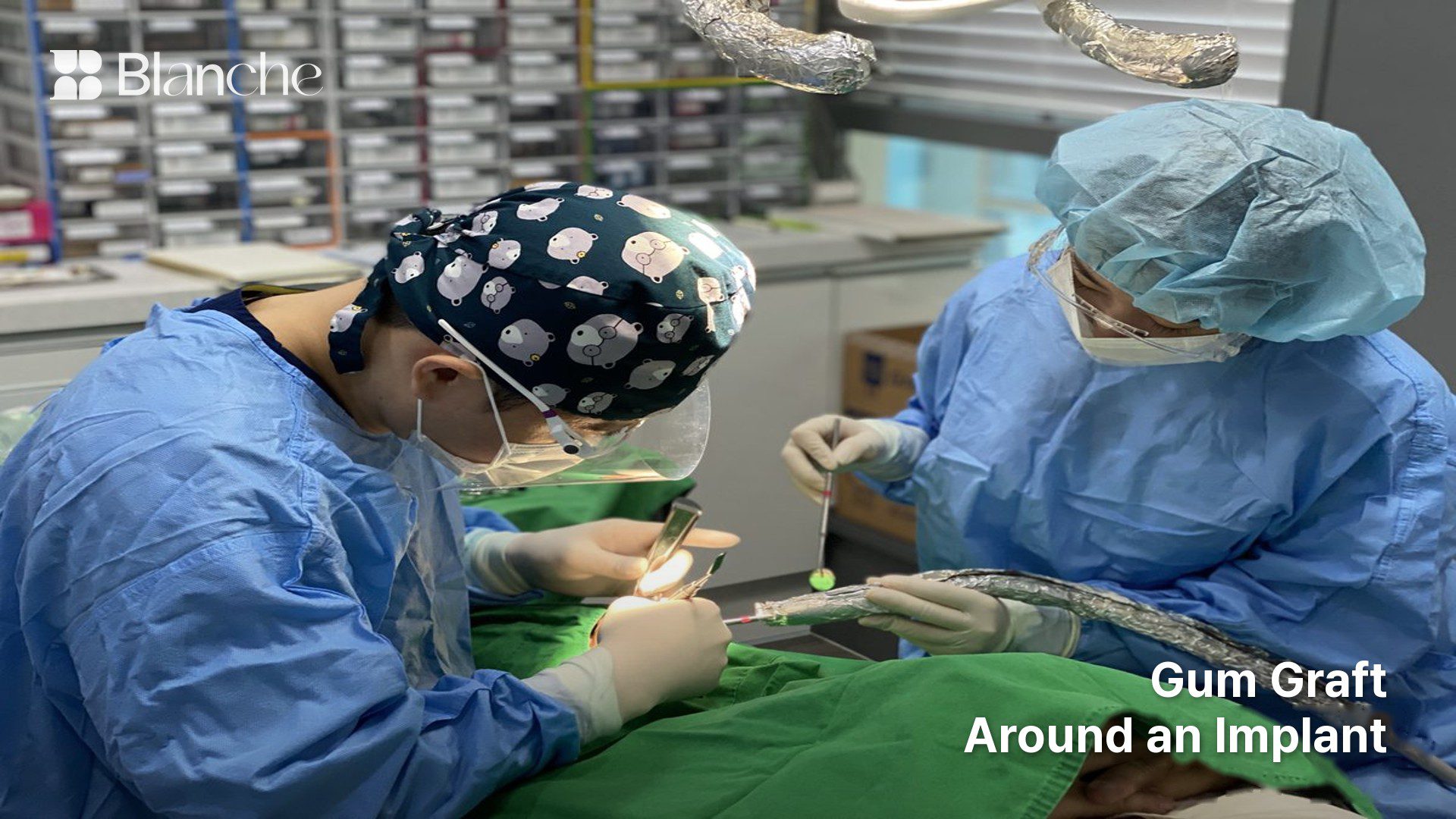
A gum graft around implant sites is something few people expect to need. The implant feels solid, yet the gum around it looks thin, or brushing there stings. So you brush that spot a little less, and then worry about that, too.
The quiet fear is usually the same: is something wrong with the implant itself?
A thin or sore gum does not answer that question on its own. That is what an exam and an X-ray are for. What we can explain here is why gum quality matters around an implant, and what a graft can and cannot do.
A note from Dr. Kim
If brushing your implant hurts, I want to know why before anyone suggests a fix.
“A smile that still works twenty years from now.”
Why the gum around an implant can feel thin or sore
Not all gum is the same. Close to the teeth there is usually a band of firm gum, called keratinized or attached gum. Further down, the gum is softer and moves with your lip and cheek.
Around some implants, that firm band is narrow or missing. In general, the gum there may then feel tender when you brush, and it can move when you talk or eat.
Think of a shirt collar. A stiff collar keeps its shape when you rub it, while a soft one folds and rolls. Firm gum around an implant behaves more like the stiff collar.
Inflammation is the other common reason for soreness. If the gum is inflamed, gum treatment comes first: scaling and treating the inflammation, before any surgery. Our article on dental implants with gum disease covers that side in more detail.
What a gum graft around implant sites does
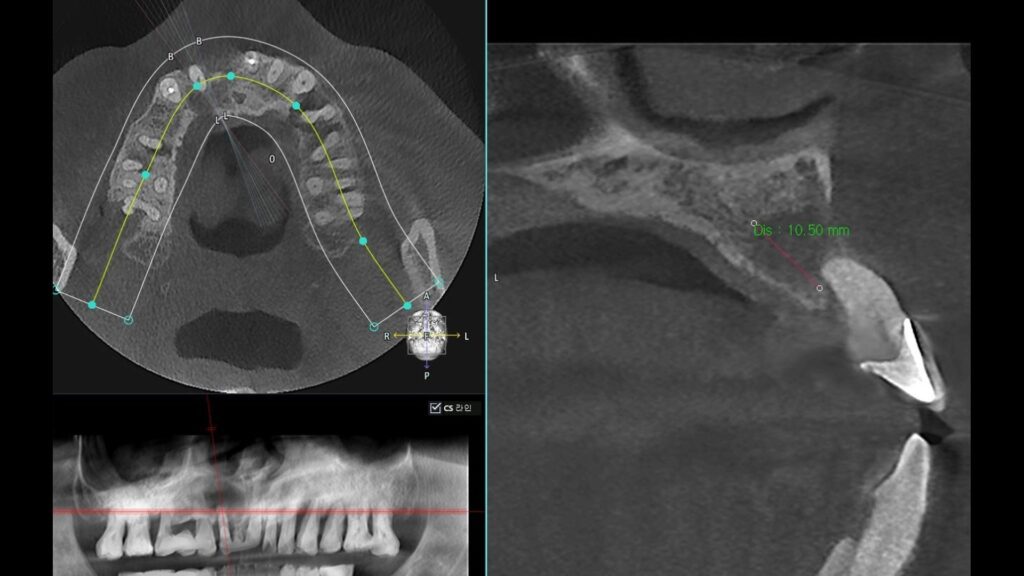
The usual tool for a narrow band of firm gum is a free gingival graft (FGG). Thin surface tissue is taken from the palate and placed to widen the firm, keratinized gum around teeth or implants.
FGG is practical rather than cosmetic. Its color and texture can look different from the gum next to it, which matters less in the back of the mouth than in a smile line.
A connective tissue graft (CTG) does a different job. Tissue from inside the palate is placed under thin gum to thicken it, and its color blends in fairly naturally.
| Graft | Main purpose | Appearance | Where it often fits |
|---|---|---|---|
| Free gingival graft (FGG) | Widens the band of firm gum | Color and texture can look different | Around implants, and around lower front teeth |
| Connective tissue graft (CTG) | Thickens thin gum | Blends in fairly naturally | Where gum thickness and color matter, such as front teeth |
Which type of gum graft around implant sites suits you is an exam decision. It depends on how much firm gum is left, how thick the gum is, and how much tissue your palate can spare.
Why thin gum makes an implant harder to clean
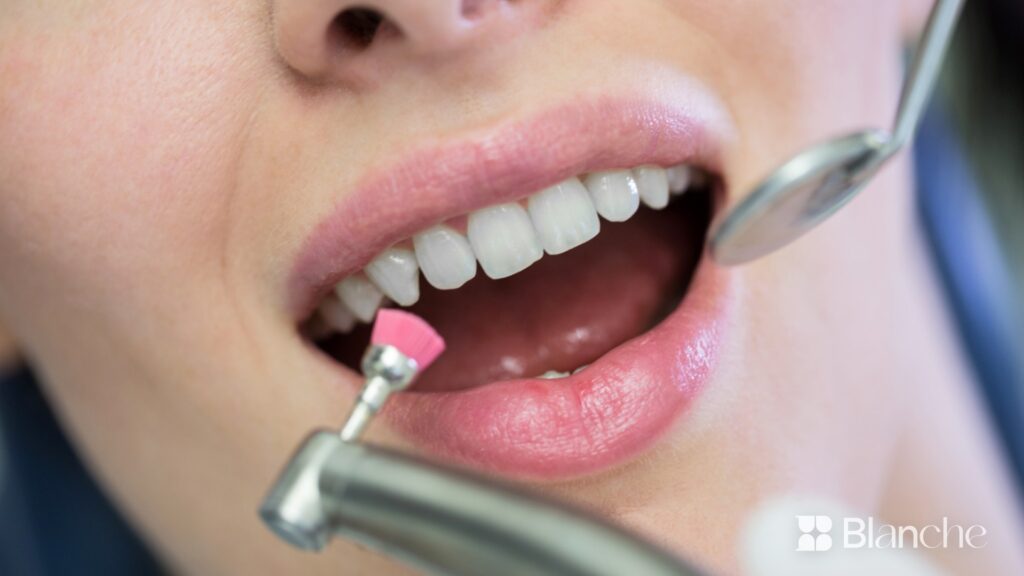
This part is general, but it matters. Keeping an implant healthy depends on keeping the area around it clean, and that depends on brushing comfortably every day.
When brushing hurts, most people brush that spot more lightly or skip it. Plaque then builds up where it is least welcome, and the gum can become inflamed.
A wider band of firm gum does not clean the implant for you. However, it can make brushing there more comfortable, which makes good habits easier to keep. Our guide to implant longevity and care covers the daily routine.
“The gum around my implant looks thin. Does it need a graft?”
Send us a close-up photo where the receded gum is visible, plus a recent X-ray if you have one. We’ll tell you what we can see, and whether the gum, the implant or both need a closer look at the exam.
How a gum graft around implant treatment fits in at Blanche
For international patients, an implant usually takes four visits. First comes implant surgery, then stitch removal about one week later. A digital scan follows 4–6 months later, after healing, and the crown is fitted about one week after the scan.
If you can stay about a week each time, the implant needs only two trips to Korea. Between trips, the implant heals at home.
A gum graft around implant sites is scheduled differently. We plan it after the exam, because its timing depends on what we find. We will not give you a number of visits for it before then.
Cost follows the same logic. The implant fee includes the abutment and zirconia crown, while the gum graft is planned separately. We give an itemized cost after the exam.
At Blanche, implant and gum surgery are performed by Dr. Kim Tae-hyung and Dr. Kim Ha-young. Both consult in English.
Before you book: what to send, and what to plan
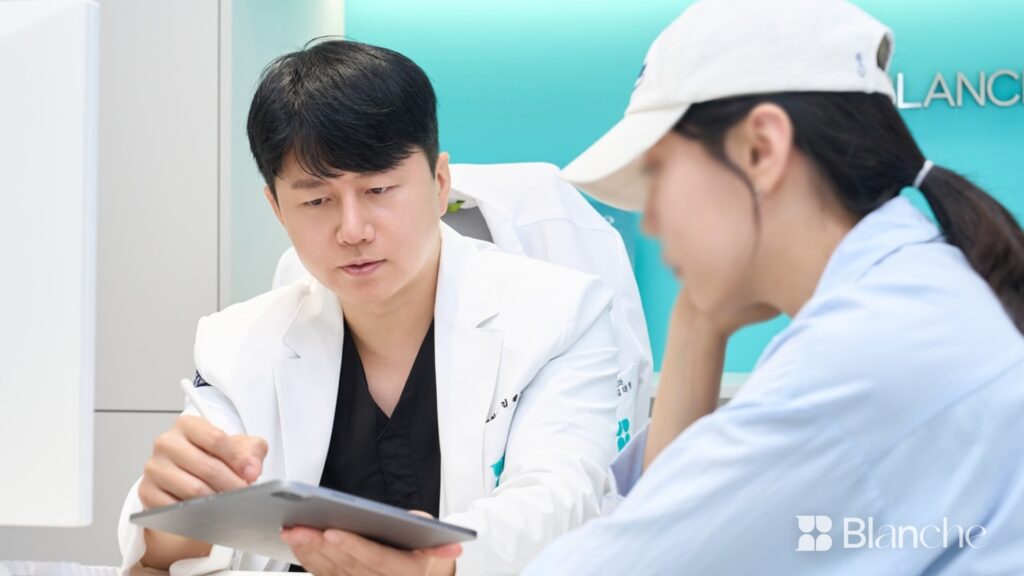
Start with a close-up photo of the gum around the implant and any recent X-ray. If the implant was placed elsewhere, any records you have from that clinic also help.
Whatever the plan, include a check-up visit before you fly home. That way, we see the graft once more before your flight.
The clinic is a 30-second walk from Nonhyeon Station Exit 4 in Gangnam, about an hour from Incheon Airport.
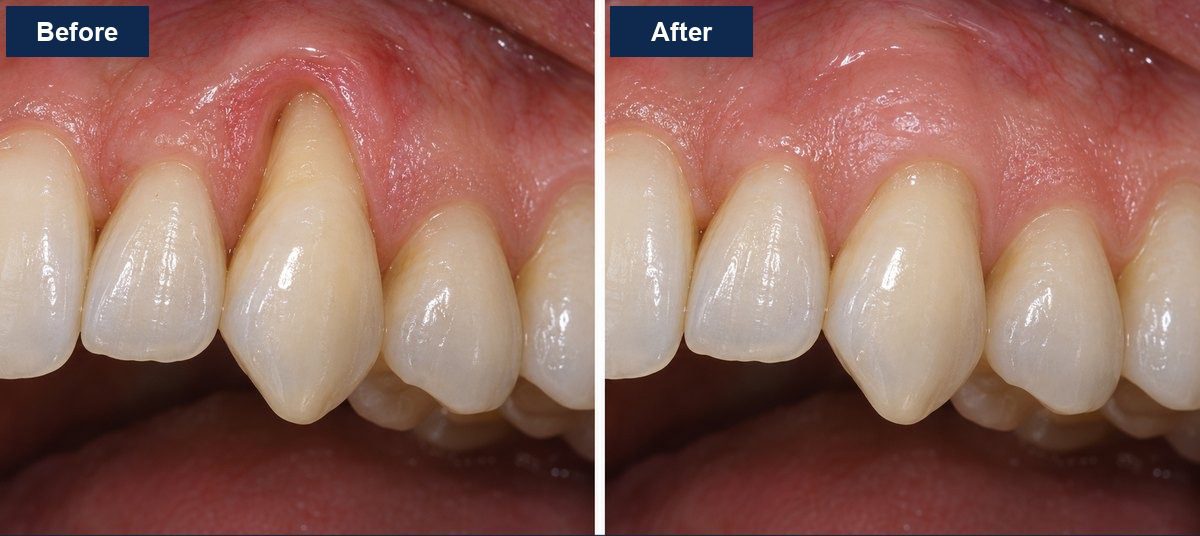
An actual case treated at Blanche Dental Clinic. Results vary with each patient’s dental condition. Root coverage using a connective tissue graft (CTG) and Emdogain, published with the patient’s consent.
Frequently asked questions
Do I need a gum graft around implant crowns that already work well?
Not always. If the gum is healthy and brushing is comfortable, a graft may not be needed. The exam decides, based on how much firm gum is left and how thick it is.
Will the grafted gum look different from my own?
It can. A free gingival graft may differ in color and texture, while a connective tissue graft blends in fairly naturally.
Does a gum graft add trips to my implant plan?
The implant usually takes four visits, or two trips if you can stay about a week each time. We schedule the gum part after the exam and explain then whether it changes your trips.
Side effects and individual differences
Swelling, pain, bleeding, sensitivity, and soreness where tissue was taken from the palate can occur after gum surgery. How much gum is restored and how long recovery takes vary from person to person.
Wherever I can, I would rather help you keep what you already have, including an implant that is working. Looking after the gum around it is part of building a smile that still works twenty years from now.
How your first consultation works
1. We listen to your concerns and what you want to be able to eat and smile with again.
2. Based on your exam, we explain why the gum receded first, then every available option.
3. We give itemized costs and a visit schedule. You are welcome to decide later, at home.
We repeat every explanation at least four times, and no decision depends on one person’s judgment alone.
Consultation — Message us on WhatsApp with a close-up photo of the gum around your implant and a recent X-ray if you have one, or check our fee schedule. Same pricing for Korean and international patients.