

Gum graft recovery is the part people plan around, especially when a flight home waits at the end of the trip. You want to know how sore it will feel, what you can eat, and when you can travel.
Underneath sits a quieter worry. What if you damage the graft by accident, or something feels wrong once you are thousands of kilometers away?
Here is what recovery generally involves, explained plainly. Your own schedule comes after the exam, because it depends on what we do.
A note from Dr. Kim
I would rather you understand recovery before surgery than discover it on the plane.
“Minimal intervention, maximum beauty.”
Gum graft recovery: what the first days often feel like
After gum surgery, swelling, pain, bleeding and sensitivity can occur. Many people also notice soreness in the palate, where the tissue was taken.
In general, the first days tend to be the most tender. After that, things usually settle gradually, but how long recovery takes varies from person to person.
Some bleeding can occur at first. If bleeding is heavy or does not settle, or if pain keeps getting worse instead of easing, contact us rather than waiting.
Before you leave the clinic, we go through the aftercare with you. Questions that come up later can be sent to us on WhatsApp.
Why the palate often feels sorer than the graft
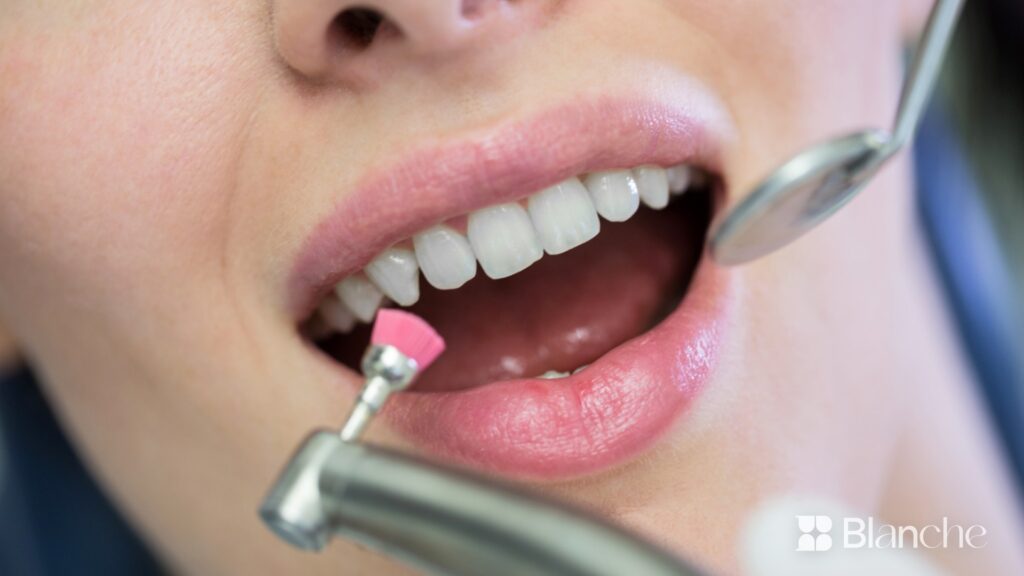
Most gum grafts borrow tissue from the roof of the mouth. That means recovery happens in two places at once: where the graft sits and where the tissue came from.
With a free gingival graft (FGG), thin surface tissue is taken from the palate. With a connective tissue graft (CTG), tissue comes from inside the palate. Either way, that area needs time to heal.
Patients are often surprised that the palate is the part they notice most. Knowing this in advance makes it less alarming when it happens.
It also helps to keep your tongue away from that spot, however tempting it is to explore it.
Protecting the graft during gum graft recovery

A new graft is a bit like freshly laid concrete. It needs to stay still and undisturbed while it sets, and pressing on it early can leave a mark that stays.
So the main rule is simple: leave the area alone. Do not pull your lip to check it, and do not brush the graft until we tell you how.
Rinsing hard, spitting forcefully or touching the area with a fingertip can disturb it, too. Gentle is the word for this stage.
| Usually helps | Usually better avoided early on |
|---|---|
| Soft food, chewed on the other side | Hard, crunchy or sticky food near the graft |
| Following the cleaning instructions we give you | Brushing directly over the graft before we say so |
| Resting and keeping your plans light | Pulling your lip or cheek to look at the area |
| Contacting us if something feels wrong | Smoking, which can affect how the gum heals |
Smoking deserves its own line. Results of gum surgery depend partly on smoking and care, so stopping, at least during recovery, is one of the most useful things you can do.
“How long should I plan to stay in Seoul for my graft?”
Send us a close-up photo where the receded gum is visible, plus a recent X-ray if you have one. We’ll tell you which options look likely, so you can plan your trip around a realistic schedule.
Planning gum graft recovery around a flight home
We do not give a fixed number of visits or days for gum surgery before the exam. Once we know which graft you need, we explain the schedule.
One thing applies to everyone: plan a check-up visit before you fly home. That way, we see the area once more before your flight, rather than you wondering about it in the air.
So please do not book a return flight before you know the schedule. Ask us about timing for your case first.
If your graft is part of an implant plan, our note on flying after dental implant surgery covers the implant side. For wider trip planning, see our dental tourism guide for Korea.
At Blanche, gum surgery is performed by Dr. Kim Tae-hyung and Dr. Kim Ha-young. Both consult in English, so you can ask recovery questions directly.
What recovery cannot change: the cause
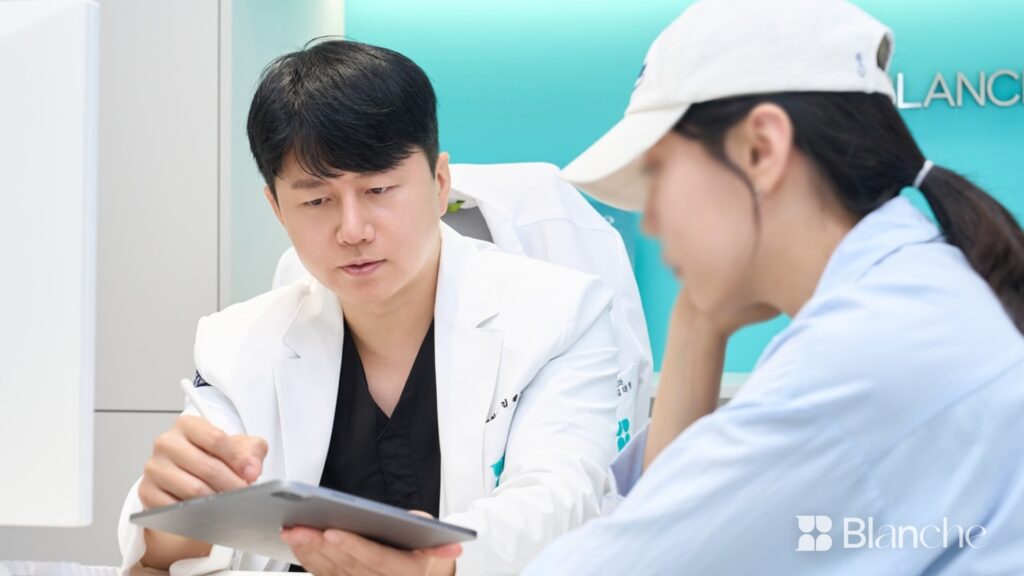
Good gum graft recovery heals the area, but it does not fix the reason the gum receded. Gum disease, hard side-to-side brushing, naturally thin gum, tooth movement or grinding, and crown edges can all play a part.
If the cause stays, gums can recede again. That is why recovery advice usually ends with a conversation about brushing and check-ups.
How much gum is restored also varies. A root may be only partly covered, depending on bone and gum, even when recovery goes smoothly.
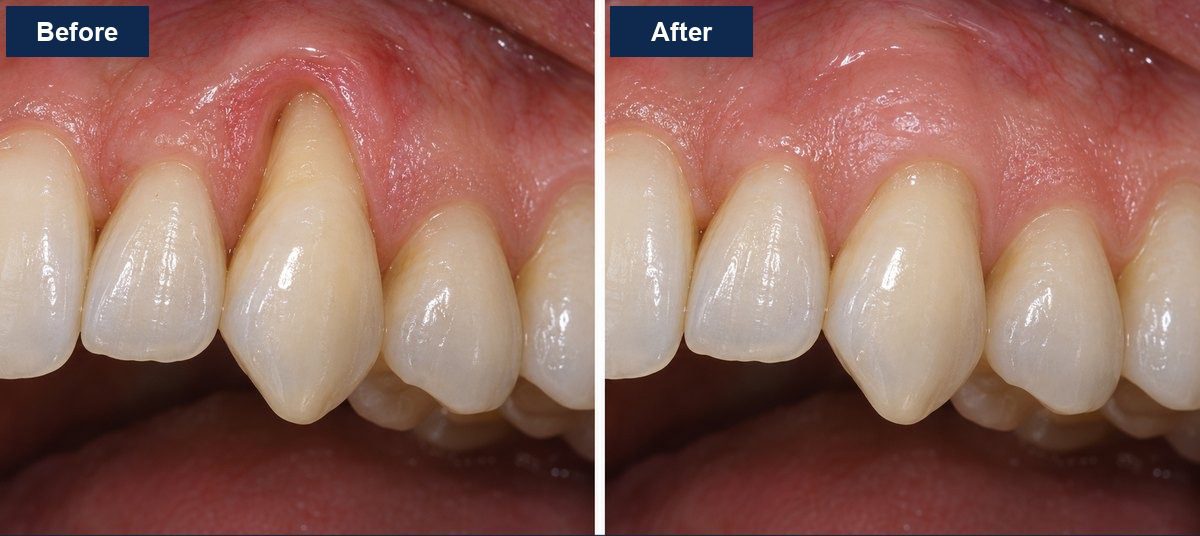
An actual case treated at Blanche Dental Clinic. Results vary with each patient’s dental condition. Root coverage using a connective tissue graft (CTG) and Emdogain, published with the patient’s consent.
Frequently asked questions
How long does gum graft recovery take?
It varies from person to person, so we explain your schedule after the exam. In general, the first days are the most tender, and the area keeps settling gradually after that.
What can I eat after a gum graft?
Soft food, chewed on the other side, is generally easiest. Hard, crunchy or sticky food near the graft is better left until we say the area is ready.
Can I fly home soon after a gum graft?
We set your schedule after the exam, and we recommend planning a check-up visit before your flight home. Please ask us about timing before you book.
Side effects and individual differences
Swelling, pain, bleeding, sensitivity, and soreness where tissue was taken from the palate can occur after gum surgery. How much gum is restored and how long recovery takes vary from person to person.
Keeping your own teeth is what all of this is for. A careful recovery and a cause that has been dealt with are what give you a smile that still works twenty years from now.
How your first consultation works
1. We listen to your concerns and what you want to be able to eat and smile with again.
2. Based on your exam, we explain why the gum receded first, then every available option.
3. We give itemized costs and a visit schedule. You are welcome to decide later, at home.
We repeat every explanation at least four times, and no decision depends on one person’s judgment alone.
Consultation — Message us on WhatsApp with a close-up photo of the receded gum and a recent X-ray if you have one, or check our fee schedule. Same pricing for Korean and international patients.