
Have you ever gotten braces, and no matter how thoroughly you brush your teeth, you can’t seem to get rid of that nagging feeling that food is left behind? You may be worried that cavities will be difficult to treat or delay your braces, but knowing the exact cause and how to manage them can help you prevent cavities and keep your teeth clean during orthodontic treatment. Here’s how, step by step.
A note from Dr. Kim — Most people read dental articles after a worry has already started. Knowing that, I kept this guide to what you need to decide, not what might scare you.
Our principle at Blanche is minimal intervention, maximum beauty. We plan for your smile twenty years from now, not just for today.
Top causes and risk factors for cavities during orthodontic treatment
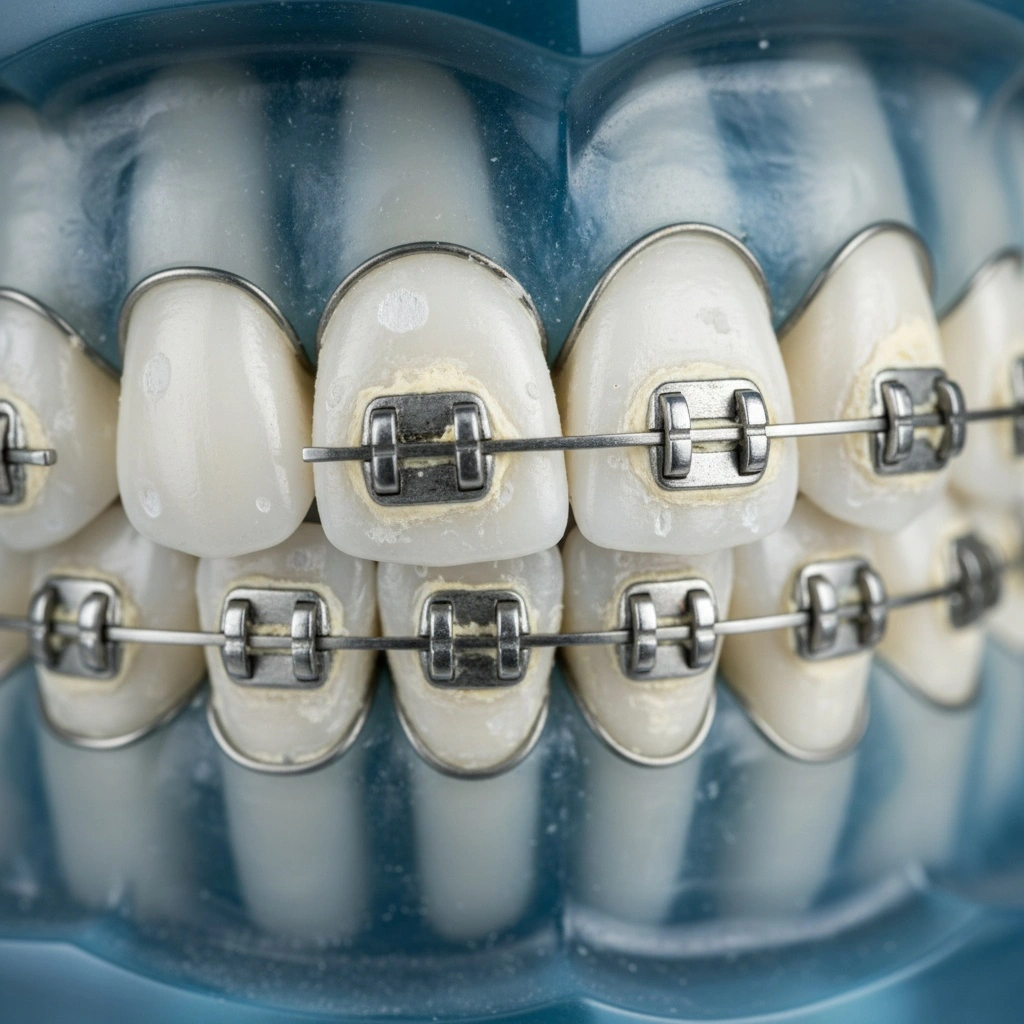
Orthodontic cavities often occur in environments where food and bacteria can easily lodge due to the structure of the braces.
Food particles can get stuck around brackets and wires, causing plaque to build up and bacteria to produce acid, which damages enamel.
This dislodgment of enamel results in white spots, which, if left untreated, will progress to tooth decay.
Brushing can be difficult, especially after braces are in place, and some areas are hard to reach, leaving you with blind spots in your cleanliness regimen.
Also, frequent consumption of sugary foods or sodas during orthodontic treatment creates an acidic environment, which weakens the enamel layer around the braces.
These changes may seem mild at first, but over time they can lead to tooth root damage or nerve treatment.
This means that good oral hygiene during orthodontic treatment is an absolute key to preventing cavities.
High-risk factors for cavities during orthodontic treatment include
- Food often gets stuck between brackets and wires
- Difficulty brushing, flossing, or using an interdental brush
- Increased frequency of sugary foods, sodas, etc.
- Plaque buildup due to neglecting to brush for a period of time
- Weakened enamel from not using fluoride toothpaste
- Poor oral care habits due to early orthodontic pain
As you can see, braces cavities don’t just end with the development of a cavity.
Missing the initial dislocation can extend the orthodontic period by weeks to months, and in severe cases, the brackets must be removed and treated, resulting in additional medical bills.
In the end, bacteria and plaque control must be addressed early on to maintain the integrity of the orthodontic process, and regular checkups are important to ensure that even small enamel damage is not missed.
How to practice good oral hygiene during orthodontic treatment to prevent cavities
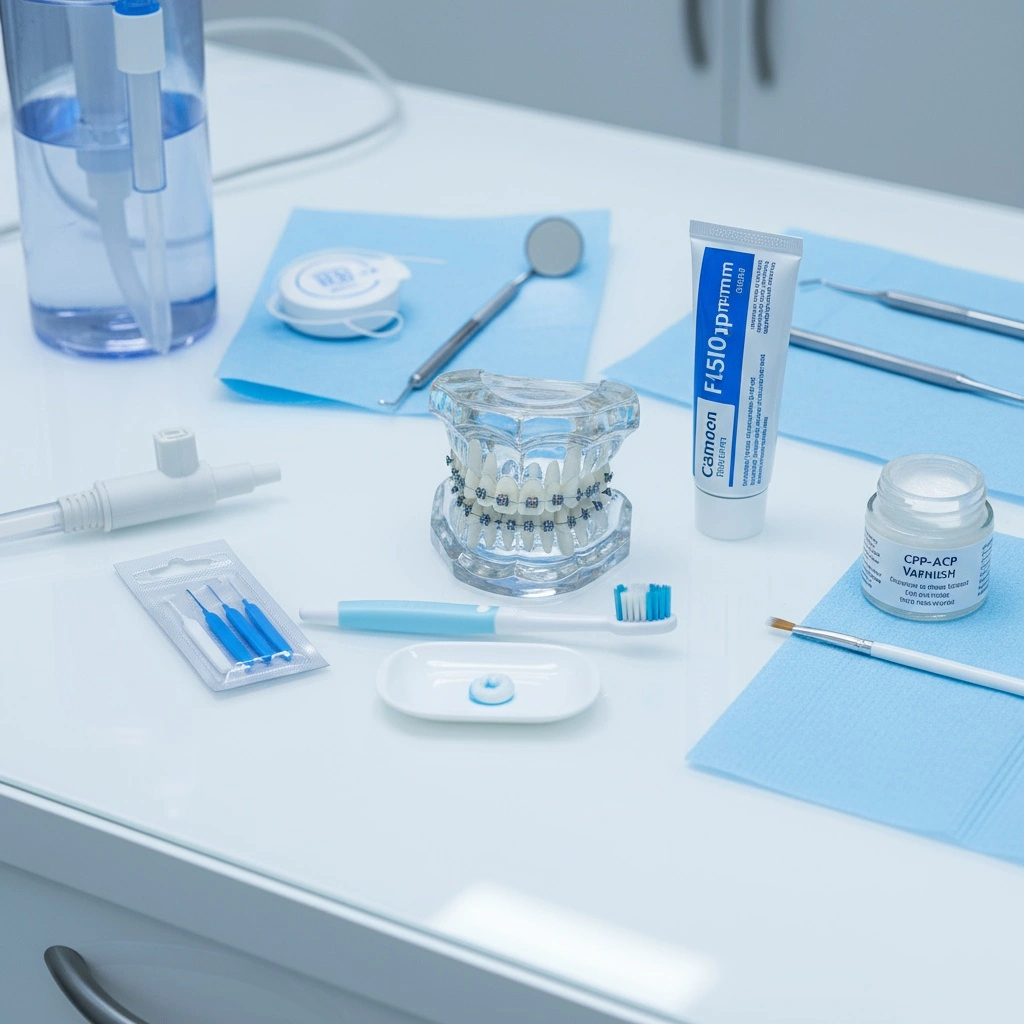
The basics of cavity prevention during orthodontic treatment are “brushing immediately after meals, at least three times a day”.
If you have braces, regular brushing alone won’t completely remove bacteria and food particles, so a combination of aids is essential.
Creating a cleaning routine right after meals is the most important preventative habit, especially since food left in the gaps between brackets and wires causes bacteria to produce acids that dissolve enamel.
Here are some key tools and usage tips to help you manage your calibrators.
Choose an orthodontic toothbrush: An orthodontic toothbrush with a “V” in the center of the bristles is great for focusing on the area around your brackets. Using a soft, small brush can also reduce gum damage.
Electric vs manual toothbrushes: Electric toothbrushes are more efficient at removing plaque around braces, but the vibration intensity should be set to “soft” to reduce the risk of bracket dislodgement.
How to floss with braces: Orthodontic threaders allow you to safely clean the interdental area under the wires. Use once daily, ideally before bed.
Choosing an interdental toothbrush size: The key is to find one that fits snugly enough to prevent gum bleeding. Below the brackets, in the narrow gap between the teeth, ‘0.6-0.8mm’ is a good average fit.
Maximizing the effectiveness of a water pick: Water picks (oral irrigators) are effective for removing food from between braces and massaging your gums. However, too much water pressure can irritate your gums, so use it on a medium setting.
Check your fluoride toothpaste concentration: Use a toothpaste with at least 1450 ppm fluoride to help harden enamel and prevent decay.
Combined with fluoride varnish orthodontics: A fluoride varnish applied by your dentist every six months can inhibit the activity of cavity bacteria and reverse early white decay.
In addition, products containing CPP-ACP (casein phosphopeptide-anhydrous calcium compound) promote remineralization of microdamage sites to inhibit caries progression.
Using an antibacterial toothpaste or alcohol-free mouthwash can help inhibit the growth of oral bacteria and slow the rate at which plaque forms.
Systematically utilizing these different tools and ingredients is the key to good oral hygiene during orthodontic treatment.
Whether and how to treat cavities during orthodontic treatment
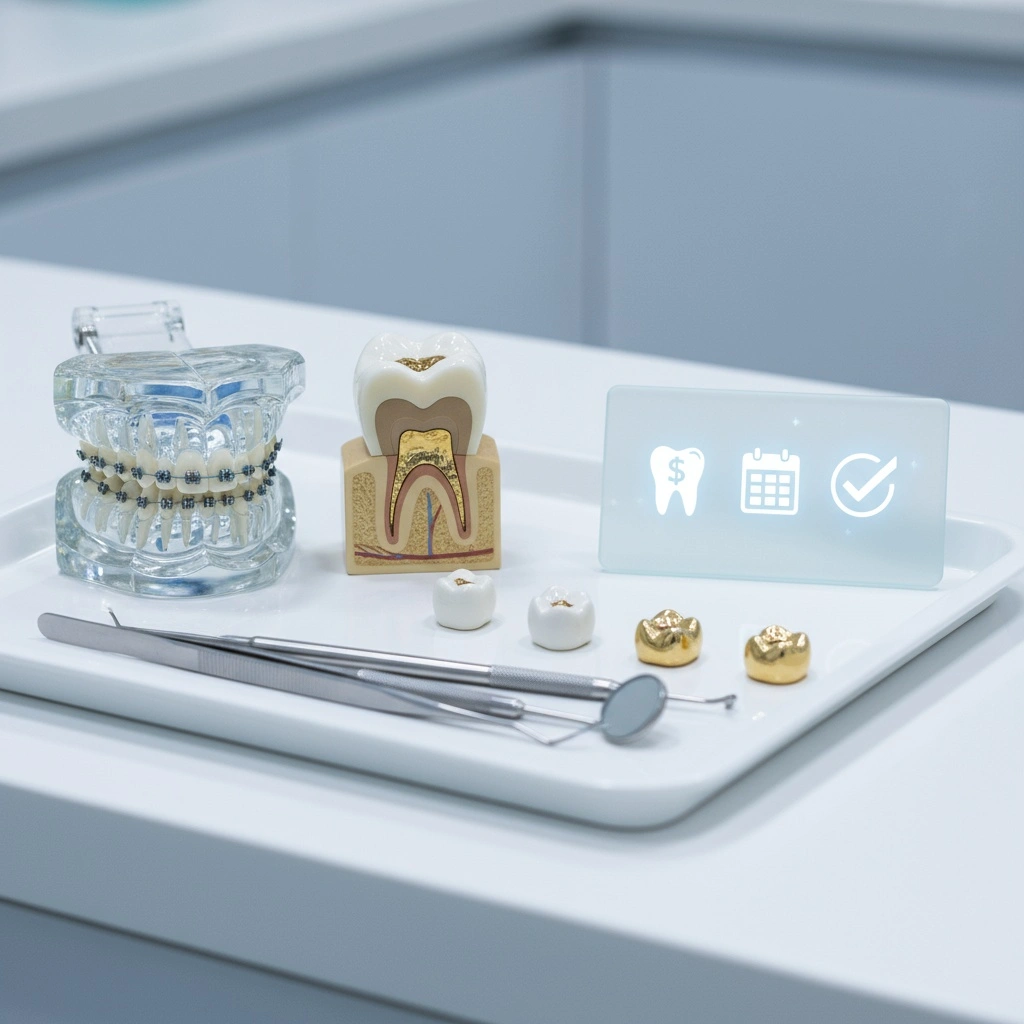
When you get an orthodontic cavity, the first question that comes to mind is, “Can it be treated during orthodontic treatment?”
The short answer is yes, but the procedure, cost, and orthodontic schedule will vary greatly depending on the size and depth of the cavity.
Minor cavities can be treated with a simple resin filling without removing the brackets.
This usually only takes one or two visits, and the cost is around $50 to $150 per cavity.
Since only some of the orthodontic wires are temporarily removed, the overall orthodontic process is not affected much.
Also, if it’s just white spots in the area between the brackets (demineralization stage), it can sometimes be solved with a fluoride application or remineralization treatment rather than resin.
However, if the cavity is deep or widespread, the situation is different.
Moderate to severe cavities require the brackets to be temporarily removed because they have damaged the inside of the tooth.
The process of reattaching them after healing adds to the cost. Often, the treatment will move on to inlays or crowns,
which can cost anywhere from $200,000 to $700,000.
In severe cases, endodontic treatment may also be required, delaying the orthodontic schedule by weeks or months.
In other words, early detection of a cavity during orthodontic treatment may end up with a simple resin treatment,
but if left unattended, the scope and cost of treatment will increase dramatically and the risk of changing the entire orthodontic plan.
The table below summarizes the estimated cost and length of treatment for each type of cavity treatment.
| Types of cavity treatment | Action required | Estimated cost | Treatment time |
|---|---|---|---|
| Resin Filling | Keep bracket, partially release wire and charge | 50,000 to $150,000 | About 30 minutes to 1 hour |
| Inlay | Temporarily removing the bracket and fabricating the prosthesis | 200,000 to $400,000 | Approximately 1-2 weeks |
| Crown | Full tooth prosthesis after removal of the damaged area | 400,000 to 700,000 | Approximately 2-3 weeks |
| Neurotherapy | Parallel crown after pulp removal | Over $300,000 to $600,000 | 2-4 weeks or more |
The need for and order of pre-orthodontic cavity treatment
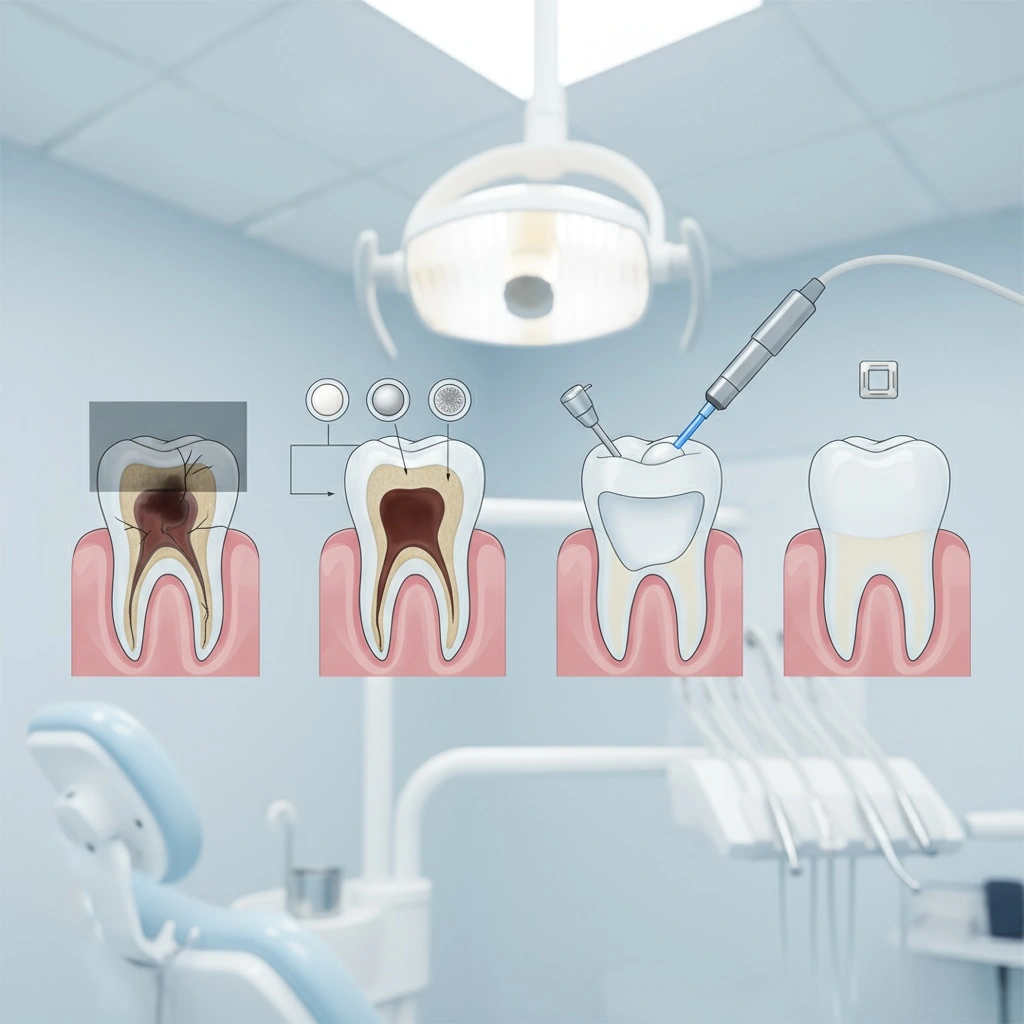
Skipping pre-orthodontic cavity treatment increases the risk of rapid cavity progression during orthodontic treatment.
When brackets or bands are attached, the area underneath is difficult to see, and brushing is limited, which can lead to rapid decay.
Especially if the orthodontic adhesive covers the tooth surface and does not completely cover the decayed area, bacteria can grow in the gap between the adhesive and the tooth, causing enamel damage or white spots (demineralization).
If you continue with orthodontic treatment in this state, when the adhesive is removed at the end of orthodontic treatment, it has often already damaged the interior of the tooth.
In some cases, we end up having to reverse parts of the remediation plan, or the treatment adds months to the overall duration.
Therefore, it is essential that all cavities are fully treated before braces are applied.
In the pre-calibration phase, it is important to have an accurate diagnosis and follow a systematic sequence.
First, we’ll take a panoramic radiographto see the entire tooth and root.
Together, we’ll look for any early cavities or hidden decay that may not be visible on the surface, and decide if a root canal is needed.
Once the cavity treatment is complete, we remove any orthodontic adhesive residue orbacterial plaque from the tooth surface to prevent recontamination.
Brackets are then placed, which greatly reduces the risk of cavity recurrence during orthodontic treatment.
It also minimizes the white spot absorption(de-plastering marks) that is common with adhesive removal after orthodontic treatment, making the overall orthodontic prognosis much more stable.
This means that before orthodontic treatment can begin, a thorough diagnosis → cavity removal → clean tooth surface preparation must be completed to ensure both orthodontic results and dental health.
Personalized cavity prevention eating guide for orthodontic patients
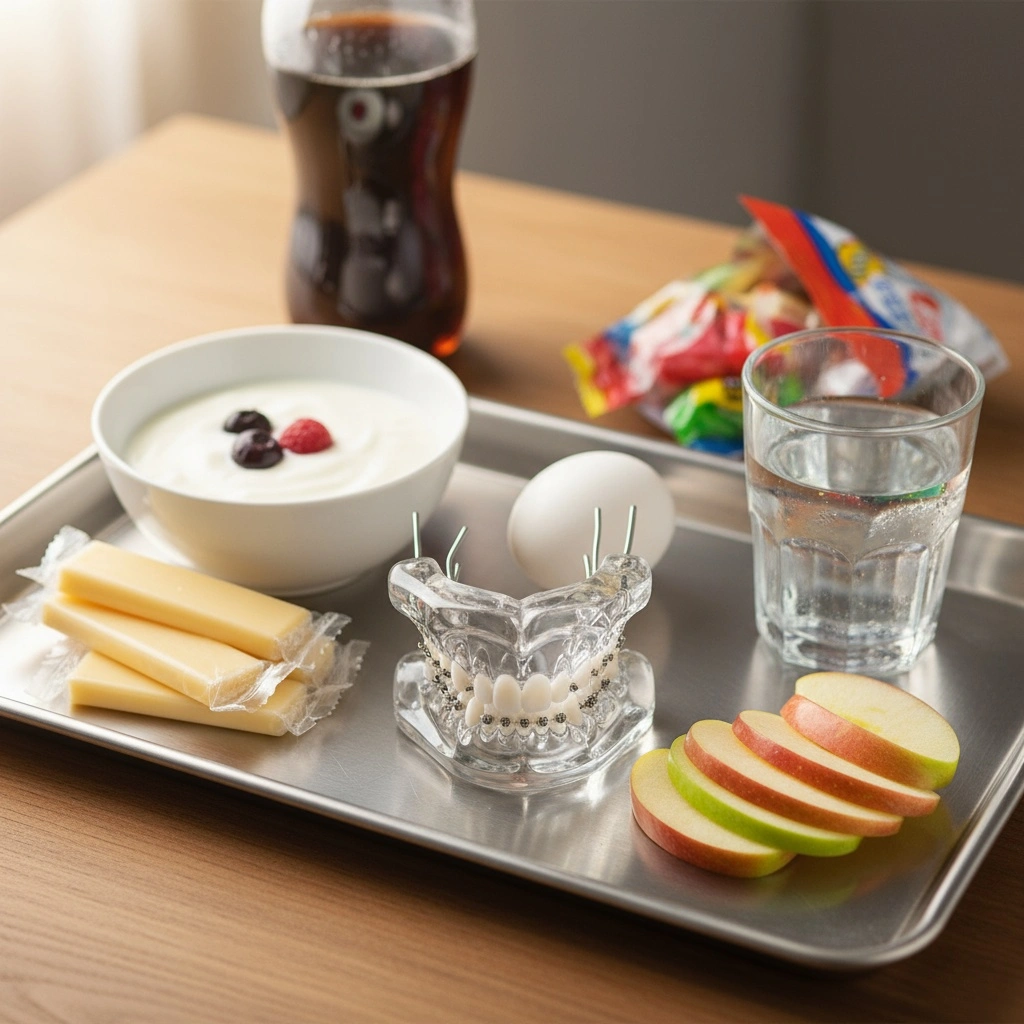
Orthodontic cavities can’t be prevented by brushing alone; your daily eating habits play a big role.
Because the brackets and wires are prone to food trapped between them, frequent consumption of sugary foods or acidic beverages can lead to rapid enamel decay, which can lead to tooth decay.
Therefore, “when and how you eat” is more important than “what you eat” during calibration.
The key is to reduce sugar intake and choose protein-based, soft snacks instead of sticky or acidic foods.
Additionally, rinsing with water immediately after snacking, or even brushing your teeth, greatly increases your chances of preventing tooth decay.
Dietary management points for orthodontic patients include the following
- Sticky jellies, candies, and caramelized treats are best avoided as they tend to stick to the gaps in your braces.
- Acidic drinks (sodas, vitamin drinks, sports drinks) weaken enamel, so replace them with water or unsweetened tea.
- Ideally, snack once or twice a day, right after meals, and finish by brushing your teeth.
- Protein snacks like unsweetened yogurt, cheese, and hard-boiled eggs help remineralize teeth.
- Limit your sugar intake to 25 grams or less total per day, and replace sweetness with whole fruits and nuts rather than beverages.
- Drink plenty of water, at least 1.5 liters per day, to inhibit bacterial growth and neutralize acidity in your mouth.
Improving your diet alone can increase your cavity prevention by more than 30%.
How to manage cavities and white spots after orthodontic treatment
When you look in the mirror right after your braces are finished, you’ll often notice white spots on the surface of your teeth.
These white spots are caused by plaque that builds up around the brackets during orthodontic treatment and creates acid, which descales the enamel.
In other words, it’s the early stages of post-orthodontic tooth decay. The areas where demineralization has occurred have a rough, translucent appearance
and do not disappear naturally over time.
They are also aesthetically problematic, especially as the spots appear irregularly as the minerals on the tooth surface are stripped away.
If left untreated, this condition can develop into tooth decay, so professional care is required immediately after the end of orthodontic treatment.
Post-orthodontic white spots are managed with CPP-ACP remineralization treatment.
This is a complex derived from milk proteins, which delivers calcium and phosphate into the damaged enamel to restore microscopic damage.
The remineralization treatment is usually repeated at least three times, one to two weeks apart, and costs between 30,000 and 70,000 won per treatment.
An additional application of fluoride varnish strengthens the remineralization effect and inhibits the activity of caries bacteria.
Spots that are already visibly stained can be treated with **ICON infiltration**, which infiltrates a clear resin under the enamel to even out the color.
If necessary, polishing (micropolishing) can also be performed to restore surface gloss for cosmetic improvement.
All of these procedures are most effective when performed within one to two months of the end of orthodontic treatment, and early detection is the key to preventing post-orthodontic decay from worsening.
Not sure where your case fits? Send two photos — front and smiling — on WhatsApp. We will tell you what is possible before you book any flight.
Caries risk comparison and management points for each type of orthodontic appliance
The risk of developing orthodontic cavities depends on the structure and material of the device.
The three most common orthodontic appliances – self-ligating brackets, ceramic brackets, and clear aligners (Invisalign) – have different benefits, but if you don’t take care of them, you’re more likely to develop cavities.
Self-ligating brackets hold the wire without rubberized rings, so they’re less likely to catch food, but they can be difficult to clean due to their complex grooves.
Ceramic brackets are more aesthetically pleasing, but their surface roughness is greater than metal, making them more susceptible to bacteria.
Clear aligners (Invisalign) may seem hygienic because they are removable, but if they are worn for long periods of time and lack cleaning, bacteria grow quickly due to the warmth and humidity in the mouth.
| Calibration device types | Tooth decay risk | Key management points |
|---|---|---|
| Self-ligating brackets | Medium | Clean intricate grooves with a water pick-interdental toothbrush and brush after every meal |
| Ceramic bracket | High | Use fluoride toothpaste and alcohol-free mouthwash to prevent surface bacteria from adhering, and limit sugary foods |
| Invisible Corrector (Invisalign) | Medium and below | Brush before and after wearing, clean your aligners twice a day, and make sure they’re completely dry at bedtime |
By segmenting your care points for each device, you can significantly reduce the risk of cavities.
Self-ligating types require a consistent cleaning routine, while ceramic requires fluoride toothpaste to prevent dislodgment.
For clear aligners, it is important to prevent bacterial film buildup by utilizing Invisalign’s exclusive cleaning solution or cleaning daily with lukewarm water.
In the end, understanding device-specific characteristics and organizing your cleaning routine is the most realistic way to prevent cavities during orthodontic treatment.
Pre-, mid-, and post-orthodontic checkups and specialist care strategies to prevent cavities
Regular dental checkups are the first and foremost key to preventing orthodontic cavities.
Brackets and wires can cause tooth decay during orthodontic treatment, so regular checkupsat least every three to six monthsare essential to detect any early dislodgement or decay.
Ideally, this should include more than just a visual exam, but also a specialized instrumented exam to check for bacterial film and microcavities around orthodontic adhesives.
Key management items for routine checkups include
Set checkup intervals: Because orthodontic patients are at higher risk for tooth decay than the general population, we recommend checkups every three months. Patients with severe plaque may be able to combine this with shorter checkups once a month.
Why it’s important to remove tartar: Tartar buildup around orthodontic appliances promotes gingivitis and tooth decay, soit should be carefullyremoved using an orthodontic scaling tip.
When to scale: Scaling during orthodontic treatment is done every 6 months, but if there is severe gum bleeding or bacterial plaque, the interval is reduced to every 3 months.
Professional hygienist care: During orthodontic treatment, a professional hygienist will provide personalized oral hygiene education, including interdental cleaning, fluoride application, and guidance on how to use a water pick.
Fluoride application procedure: Fluoride varnish is applied at 6-month intervals to strengthen enamel before orthodontic treatment, inhibit caries bacteria during orthodontic treatment, and repair demineralized areas after orthodontic treatment.
Regular check-ups and professional care can go beyond just preventing cavities and increase orthodontic success.
It’s important to analyze bacterial distribution, salivary pH, and gum response to create a personalized oral care planbased on the patient’s condition.
For example, if plaque concentration is high, water picks and interdental toothbrushes should be used more frequently, and those at risk of recession should be combined with CPP-ACP applications to maintain clean orthodontic results for the long term.
The Dentist’s Opinion on Orthodontic Cavities
Tooth decay during orthodontic treatment is not simply a matter of hygiene, but a balance of device structure and care habits. The smartest approach is to combine cavity prevention and early detection while orthodontic treatment is still ongoing.
If you have fixed aligners, it’s important to brush carefully, focusing on areas where food is more likely to get stuck, and using a fluoride toothpaste or mouth rinse as a supplement can help. For clear aligners, the key is to take advantage of their removability and clean them immediately after meals to keep them clean.
Also, if you suspect a cavity during orthodontic treatment, it’s a good idea to work with your orthodontist to make adjustments in stages rather than delaying treatment. Depending on the size or location of the cavity and the stage of orthodontic treatment, the treatment approach and duration may vary, so it’s a good idea to check your oral health regularly.
Remember, tooth decay is best prevented, so keep up your daily care routine. Thank you for reading this long post.
Frequently asked questions
What are the main causes of cavities during orthodontic treatment?
If I get a cavity during orthodontic treatment, can it be treated?
Do I have to treat cavities before braces?
What is the best way to brush my teeth to prevent cavities during orthodontic treatment?
How should I manage my eating habits to prevent cavities during orthodontic treatment?
What happens at your first consultation
1. We listen first — what bothers you and what you hope for. 2. We walk you through your scan results and every option.
3. You get itemized costs and timing, and you can decide later, even after you fly home. At Blanche, we explain everything at least four times, by principle.
Consultation — Blanche Dental is located between Nonhyeon and Sinnonhyeon stations in Gangnam, Seoul. For a consultation in English, message us on WhatsApp with your photos, and see our pricing page for current fees.