
Seoul now sits alongside Istanbul and Bangkok on every dental tourism shortlist — but for very different reasons. Korea’s pitch is not rock-bottom pricing; it is high-end dentistry at 40–60% of U.S. prices, wrapped in a system that is actually regulated for foreign patients. As a dentist practicing in Gangnam, I will give you the honest version of dental tourism in Korea: which treatments genuinely fit a short trip, what things cost in 2026, how safety oversight works, and how to plan so you fly home with a result — not a problem.
A note from Dr. Kim — Most people read dental articles after a worry has already started. Knowing that, I kept this guide to what you need to decide, not what might scare you.
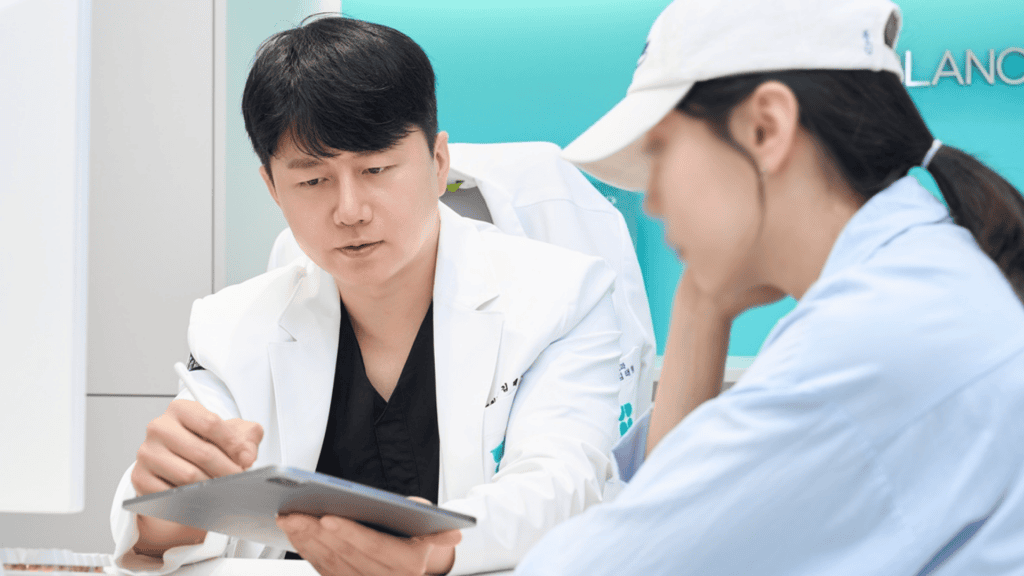
Our principle at Blanche is minimal intervention, maximum beauty. We plan for your smile twenty years from now, not just for today.
Why Korea for Dental Tourism?
- Depth of specialization: Gangnam alone concentrates hundreds of clinics, many with in-house dental labs — the infrastructure that makes same-day ceramic work possible.
- Regulation: Clinics treating international patients can register with the government under the Medical Korea program, which creates legal accountability that most “cheap dental abroad” destinations lack.
- Case volume: High patient throughput means your case is rarely the first of its kind — experience compounds into predictable results.
- Logistics: Incheon’s connections, subway access, and English/Japanese-capable clinics make a treatment trip manageable without an agency.
What Treatments Fit a Short Trip — and What Doesn’t
| Treatment | Trip feasibility | Typical stay |
| Veneers (no-prep / porcelain) | Excellent — same-day possible with in-house lab | 2–3 days |
| Teeth whitening | Excellent — single session | 1 day |
| Crowns / ceramic restorations | Good | 2–5 days |
| Implants | Possible but staged — usually 2 trips, months apart | 2 visits |
| Orthodontics (braces / Invisalign) | Not for one-off tourists — needs ongoing supervision | Residents / frequent visitors only |
The honest boundary: anything requiring months of follow-up is not a tourist treatment. Veneers and whitening are the sweet spot; implants work if you can return; orthodontics belongs to residents and frequent flyers.
Dental Tourism Korea Costs (2026)
| Treatment | Korea (Gangnam) | United States | Japan |
| Porcelain veneer (per tooth) | ₩300,000–₩700,000 | $1,200–$2,500 | ¥100,000–¥200,000 |
| Professional whitening | ₩200,000–₩500,000 | $500–$1,000 | ¥30,000–¥70,000 |
| Implant (fixture+crown) | ₩1,000,000–₩2,500,000 | $3,000–$6,000 | ¥300,000–¥500,000 |
For a 6–10 tooth smile makeover, the savings typically cover flights and hotel several times over. Per-tooth specifics are broken down in our veneers cost guide, and the single-visit workflow in the one-day veneers guide.
Is Dental Tourism in Korea Safe? How Oversight Actually Works
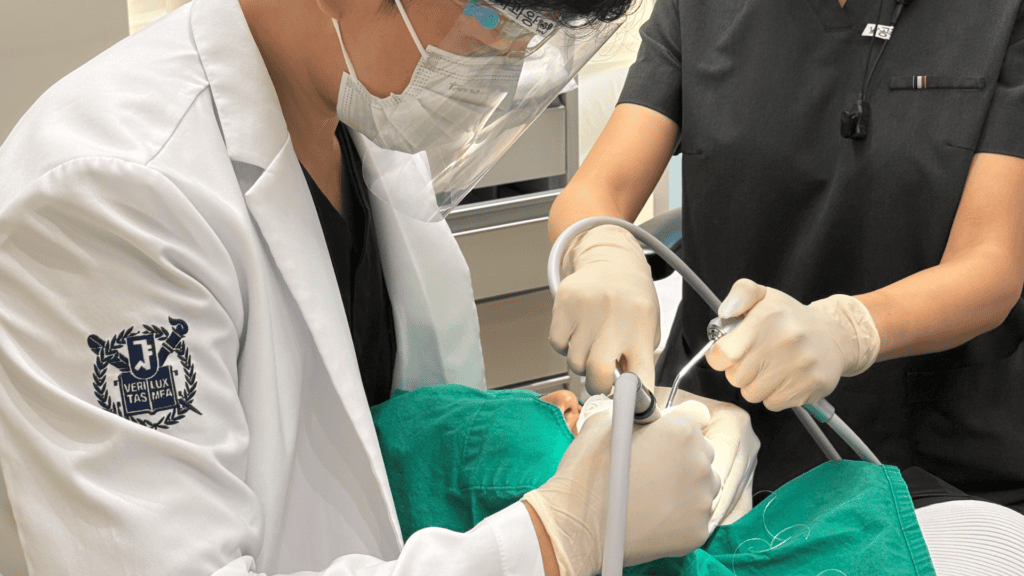
Korea regulates foreign-patient care at the clinic level: facilities registered as international patient institutions are legally accountable for foreign patient treatment, from record keeping to dispute handling. When vetting a clinic, this registration — plus the dentist’s credentials, case volume, and whether a lab operates in-house — tells you more than any review site. Verify the dentist will personally handle diagnosis and bonding, not just the consultation.
Not sure where your case fits? Send two photos — front and smiling — on WhatsApp. We will tell you what is possible before you book any flight.
Planning Your Dental Trip in 5 Steps
- Remote consultation first: send photos before booking flights — a good clinic will tell you honestly whether your case fits your timeline.
- Get a written all-inclusive quote: diagnosis, temporaries, bonding, adjustments, and follow-up should be one number.
- Build in a buffer day: schedule your final check at least a day before your flight for bite adjustments.
- Confirm aftercare protocol: how are chips or debonding handled once you are home? Photo follow-up should be standard.
- Keep your records: ask for scans and treatment documentation before leaving — your home dentist will thank you.
Side Effects and Honest Limitations

Dental treatments carry the same risks abroad as at home — sensitivity, debonding, gum irritation — with the added constraint that you are far away if something needs attention. That is precisely why treatment choice (trip-appropriate procedures only), clinic accountability (registration, warranty terms), and a buffer day matter more in dental tourism than price. Results vary by individual, and suitability must be confirmed by examination, not email.
If you are considering a treatment trip to Seoul, start with a photo consultation. Blanche Dental Clinic is a government-registered international patient facility with its own ceramic lab (Blanche Lab), located at Nonhyeon Station Exit 4 (Line 7) — 7F, B722 Building, 531 Gangnam-daero, Seocho-gu, Seoul. Open Sundays; reach us at +82-1877-2882 or via the English consultation page.
Frequently Asked Questions
How many days do I need for dental tourism in Korea?
Is dental work in Korea cheaper than in the U.S.?
Do Korean dental clinics speak English?
What happens if something goes wrong after I fly home?
This column was reviewed and supervised by Dr. Taehyung Kim, DDS (Seoul National University), director of Blanche Dental Clinic. It is general information, not a diagnosis; individual results vary and suitability must be confirmed by clinical examination.
What happens at your first consultation
1. We listen first — what bothers you and what you hope for. 2. We walk you through your scan results and every option.
3. You get itemized costs and timing, and you can decide later, even after you fly home. At Blanche, we explain everything at least four times, by principle.
Consultation — Blanche Dental is located between Nonhyeon and Sinnonhyeon stations in Gangnam, Seoul. For a consultation in English, message us on WhatsApp with your photos, and see our pricing page for current fees.