

Veneers bad breath is one of the quietest worries patients bring to us. The smile looks right, but something smells off, and nobody wants to say it out loud.
Here is the part that surprises people. Porcelain itself has no smell, and it cannot rot. Whatever you notice is coming from somewhere else.
This article explains the three places the odor actually starts, how to tell them apart at home, and what a dentist can fix.
A note from Dr. Kim — Many people who land on this page share one quiet worry: what if I damage healthy teeth for nothing? It is the first question I ask myself with every patient.
Blanche began with that question: why harm a natural tooth worth more than any restoration? That is why our signature Blanche no-prep veneers follow one rule — minimal intervention, maximum beauty.
Why Veneers Bad Breath Is Never About the Porcelain
Odor in the mouth comes from bacteria breaking down proteins. Those bacteria need a surface to sit on and a place to hide.
Glazed porcelain is one of the smoothest surfaces in dentistry. Bacteria struggle to hold onto it.
So the smell is not the veneer. It is the thin line where the veneer meets your tooth, or the space next to it.
Think of a window fitted into a wall. The glass is not the problem. A gap in the frame is.
Veneers Bad Breath: The Three Real Sources
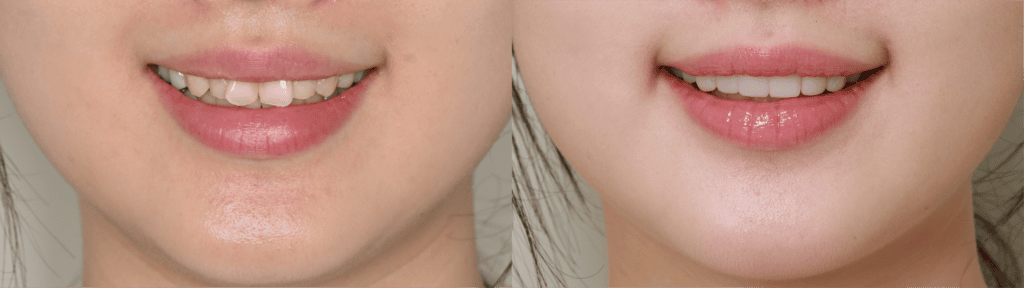
1. The margin, where veneer meets tooth
Every veneer has a border. If that border sits perfectly flush, plaque slides off it.
If it overhangs by even a fraction of a millimetre, it becomes a ledge. Bacteria collect under that ledge, and your toothbrush cannot reach them.
This is why margin fit matters more than the brand of ceramic. A beautiful veneer with a rough border will cause problems within months.
2. Leftover bonding material
Veneers are bonded with an adhesive resin. Any excess must be removed and polished before you leave the chair.
Excess that hardens between two teeth creates a rough shelf right where floss should pass. Food catches there daily.
We use the Ivoclar bonding system, which sits at the higher end of adhesive pricing. It is chosen for biocompatibility and colour stability, and it is one reason veneer pricing differs between clinics. Ceramic grade is only part of the cost.
3. The gum, not the tooth
Inflamed gum tissue bleeds, and blood breaks down. That process has a distinct metallic smell.
If your gums bleed when you floss around the veneers, the odor is likely coming from the tissue rather than the restoration.
Telling the Sources Apart at Home
You can narrow this down before your appointment. Use a length of unwaxed floss and check one contact point at a time.
| What you notice | Most likely source | What the dentist checks |
|---|---|---|
| Floss shreds or catches at one spot | Rough margin or leftover bonding | Margin fit under magnification, X-ray of the contact |
| Floss smells only between two specific teeth | Trapped debris at that contact | Contact tightness and surface polish |
| Gums bleed on flossing, smell is general | Gum inflammation | Pocket depth and plaque control |
| Smell present before the veneers too | Tongue coating, dry mouth, sinus, or diet | Full oral exam, referral if needed |
| Sudden change with sensitivity | Decay under or beside a veneer | X-ray and vitality testing |
That last row matters most. A veneer does not protect the whole tooth, so decay can still start at the edges. Our article on what actually happens to enamel under veneers covers this in detail.
What We Do About Veneers Bad Breath in the Clinic
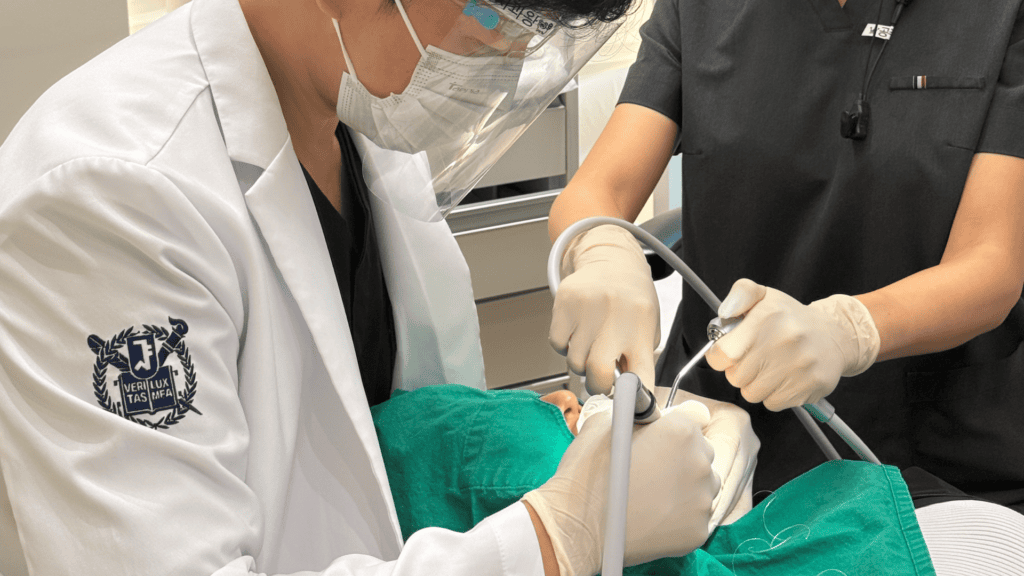
The first step is finding the exact tooth. General mouthwash advice does nothing if one contact point is the source.
Once located, most cases resolve with polishing. A rough margin can often be smoothed and re-glazed without replacing anything.
Leftover bonding is removed the same way. It is a short visit, not a redo.
Replacement is reserved for veneers with an open margin or decay underneath. In that situation the restoration is no longer sealing the tooth.
Our in-house laboratory (Blanche Lab) lets us check fit and adjust in the same visit rather than sending work out and waiting. Fees are identical for Korean and international patients, with no surcharge for visitors.
For the full one-day program — technology, pricing, and booking — see our One-Day Veneers page.
Not sure where your case fits? Send two photos — front and smiling — on WhatsApp. We will tell you what is possible before you book any flight.
Preventing Veneers Bad Breath From the Start
Prevention begins at the fitting appointment, not at home. Ask your dentist to floss every contact before you leave.
Floss should pass with slight resistance and come out clean. If it shreds on day one, it will shred every day after.
At home, the routine is simple but must be consistent. Clean between every veneer daily, and brush the tongue, which holds most odor-producing bacteria.
Water flossers help around margins but do not replace floss at tight contacts. Our veneers aftercare guide sets out the first week and the first year.
One more note on habit. Coffee and smoking do not make porcelain smell, but they dry the mouth and slow saliva, which makes any existing odor stronger. The same habits affect surface colour, as covered in what actually discolors veneers.
Veneers Bad Breath: Frequently Asked Questions

Can veneers themselves cause bad breath?
No. Porcelain is non-porous and does not decay or hold odor. Problems come from the margin where the veneer meets the tooth, from leftover bonding material, or from the gum around it.
My breath got worse right after getting veneers. Why?
Two common reasons. Excess bonding may not have been fully polished away, or the gum is still reacting to the procedure. Both are checked at a short follow-up visit, and neither usually requires replacing the veneer.
Will replacing my veneers fix the smell?
Not always, and it is rarely the first step. If the source is gum inflammation or tongue coating, new veneers change nothing. Replacement makes sense when there is an open margin or decay underneath.
Side Effects and Individual Variation
Results vary between individuals. Temporary sensitivity or gum tenderness can occur after any bonding procedure, and outcomes depend on gum health, bite forces, and daily cleaning habits.
This article describes general clinical reasoning and does not replace an examination. Persistent bad breath can also have medical causes outside dentistry and may need a physician’s assessment.
A Closing Note
Patients rarely raise this topic first. It usually comes near the end of an appointment, quietly.
I mention it here because it is almost always fixable, and often in a single short visit. The hard part is finding the exact spot, not treating it.
If you are unsure whether your veneers are sealing properly, send photos ahead of your visit and we can review them before you travel. We are a short walk from Nonhyeon Station in Gangnam, Seoul.
Dr. Kim Tae-hyung (Director, Blanche Dental Clinic · Seoul National University trained dentist)
What happens at your first consultation
1. We listen first — what bothers you and what you hope for. 2. We walk you through your scan results and every option.
3. You get itemized costs and timing, and you can decide later, even after you fly home. At Blanche, we explain everything at least four times, by principle.
Consultation — Blanche Dental is located between Nonhyeon and Sinnonhyeon stations in Gangnam, Seoul. For a consultation in English, message us on WhatsApp with your photos, and see our pricing page for current fees.