
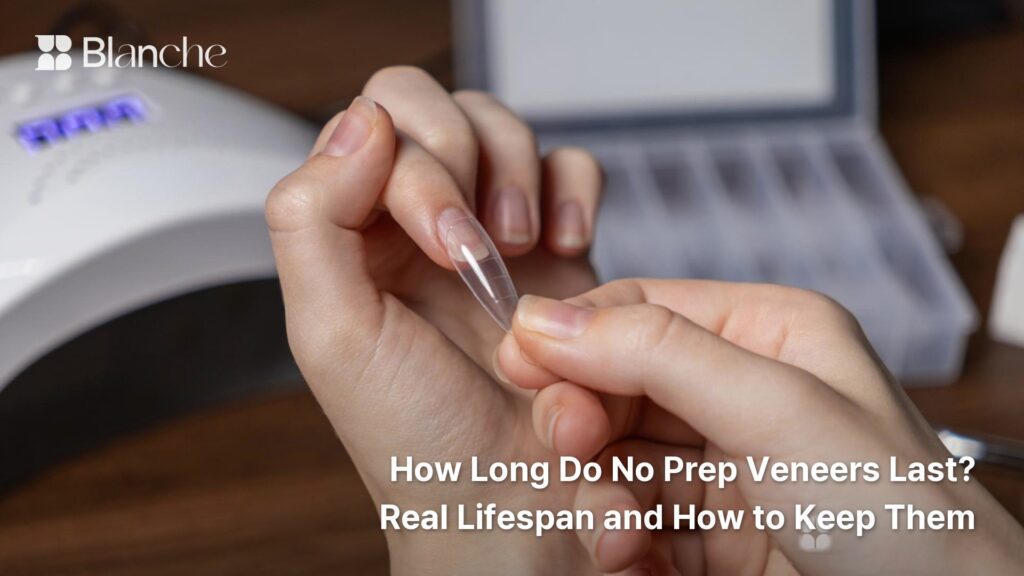
How long do no prep veneers last? If you are thinking about veneers without drilling, this is usually the second question, right after “are they safe?”
The worry makes sense. Something thin and glued on sounds like it might not survive years of coffee, apples, and late-night stress.
This guide gives you the honest range, the three things that decide lifespan on treatment day, and the two habits that matter most afterward.
A note from Dr. Kim — Many people who land on this page share one quiet worry: what if I pay for this and have to redo it in a few years? It is a question I take seriously with every patient.
Blanche began with a simple question: why harm a natural tooth worth more than any restoration? That is why our signature Blanche no-prep veneers follow one rule — minimal intervention, maximum beauty, planned for your smile twenty years from now.
How long do no prep veneers last on average?
In our clinic, well-made no-prep veneers typically last around 10 years, and many patients keep them for 15 years or more.
Research on porcelain laminate veneers points the same way. Beier and colleagues (2012) reported a 10-year survival rate above 91%, and Layton and Walton (2012) described veneers lasting over 20 years.
Those studies cover porcelain veneers in general, not only no-prep designs. For a material-by-material comparison, see our guide on how long veneers last.
Why answers on how long no prep veneers last vary so much
You will find people online saying “two to three years” and others saying “a lifetime.” Both can be true, because lifespan depends less on the label and more on how the veneer was made and bonded.
| Factor | Helps no prep veneers last | Shortens lifespan |
|---|---|---|
| Bonding surface | Healthy enamel left intact | Bonding onto exposed dentin |
| Ceramic and bonding agent | High-grade ceramic, premium adhesive system | Low-cost material, rushed bonding |
| Edge (margin) fit | Smooth, sealed edge at the gumline | Ledges that trap plaque |
| Bite | Checked and adjusted after bonding | Heavy contact on a thin edge |
| Home habits | Night guard, six-month checkups | Grinding, biting nails or ice |
Why no prep veneers last longer than most people expect
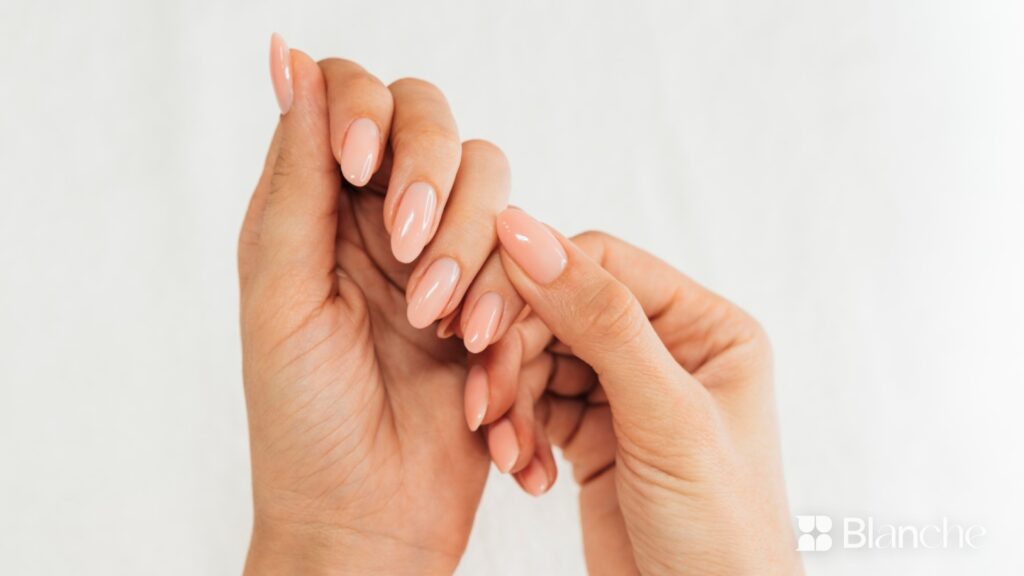
Here is the part that surprises people. Keeping your enamel is not only kinder to your teeth; it also helps the veneer stay on.
Ceramic bonds far more strongly to enamel than to the softer dentin underneath. Traditional veneers that remove more tooth can end up bonding partly to dentin.
No-prep veneers keep almost all of the enamel, so the bond has the best surface to hold on to.
Why no prep veneers last: an everyday picture
Think of a screen protector on a phone. On a clean, smooth glass surface, a thin protector stays put for years.
Scratch or sand the glass first, and even a thicker protector starts lifting at the corners. Enamel is that clean glass.
What decides how long no prep veneers last: three things on treatment day
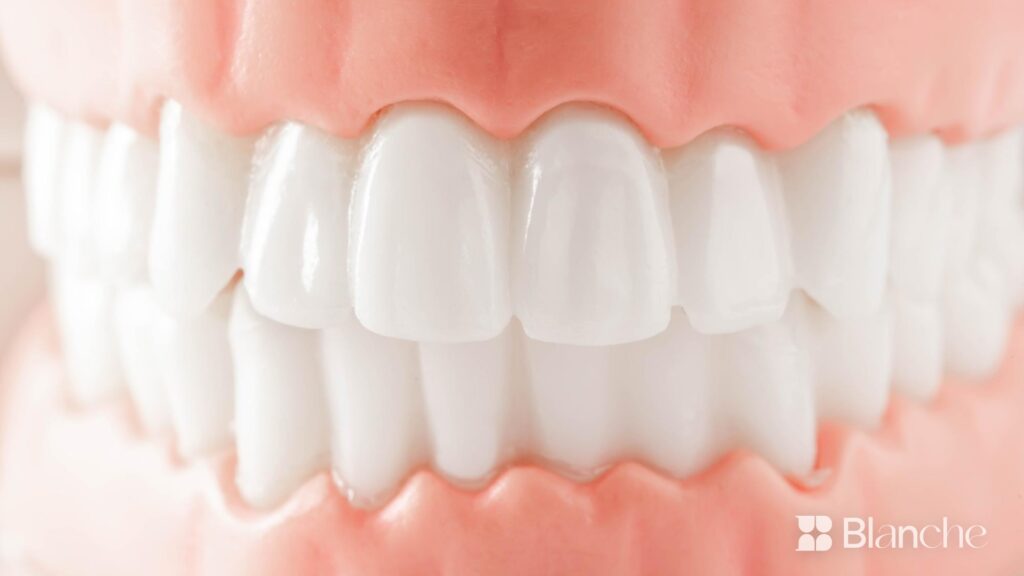
In our experience, more than 70% of a veneer’s lifespan is decided before you ever leave the chair.
1. The ceramic
No-prep ceramics are very thin, so the material must be strong enough to survive daily biting once bonded. It also needs to look like enamel, with a slightly translucent edge.
At Blanche, ceramics are made in our in-house lab, Blanche Lab, near Nonhyeon Station. The dentist and technician adjust thickness and edges together.
2. The bond
Veneers are bonded with resin cement so the tooth and ceramic act as one unit. The quality of the bonding system matters as much as the ceramic.
We use the Ivoclar adhesive system, among the highest-priced on the market. It is biocompatible and highly color-stable, so edges stay clean for years.
3. The edge and the bite
The edge where the veneer meets the gum must be smooth and sealed. A small ledge collects plaque, and that slowly shortens the veneer’s life.
After bonding, we check your bite so no single thin edge takes all the force.
Not sure where your case fits? Send two photos — front and smiling — on WhatsApp. We will tell you what is possible before you book any flight.
How to make no prep veneers last at home
The good news: the home part is short. Most patients who keep their veneers for over a decade do two things consistently.
Wear a night guard if you clench or grind
Many people clench in their sleep without knowing it. A thin night guard takes most of that force off the veneers.
If there is one habit I would ask you to keep, it is this one.
Come in for checkups every six months
A cleaning and a quick check of the edges catch small issues early. A tiny chip or stain at the edge is simple to fix when found early.
If you live abroad, any dentist can do routine cleanings. Just tell them you have bonded ceramic veneers.
Everyday cautions to help no prep veneers last
Avoid using your front teeth as tools, such as opening packages or biting ice and nails. Normal meals, including apples and meat, are fine once the bond has set.
What happens when no prep veneers reach the end of their life?
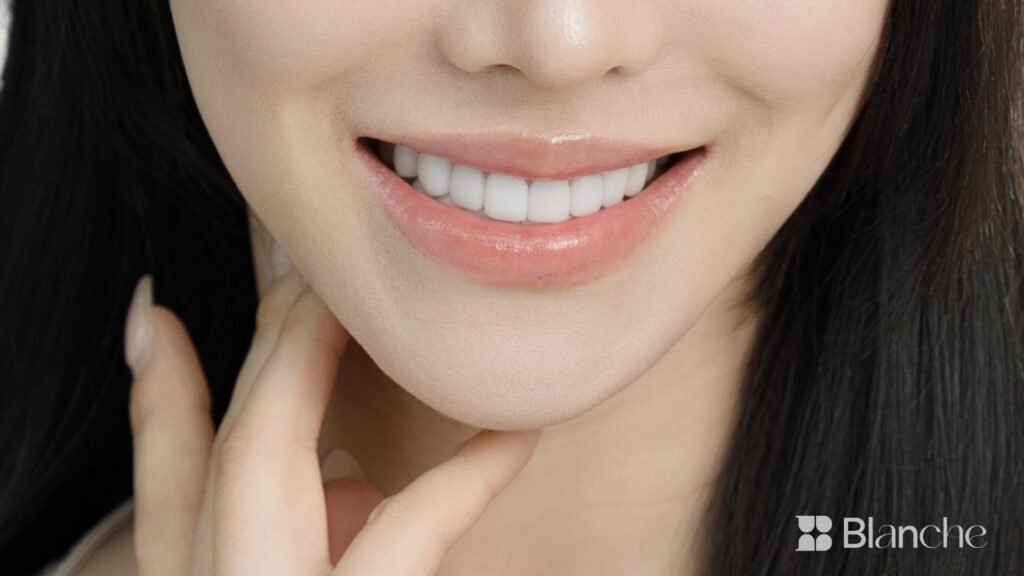
Eventually, a veneer may chip, stain at the edge, or simply look dated. Because the tooth underneath was barely touched, you usually still have good options.
In many cases the old veneer can be replaced without further reduction. That is one more reason we start with the least invasive design. For more on who qualifies and typical costs, see no-prep veneers in Korea.
Planning your visit to Seoul
International patients pay the same price as Korean patients at Blanche. You can start with a photo consultation before booking travel.
For the full one-day program — technology, pricing, and booking — see our One-Day Veneers page.
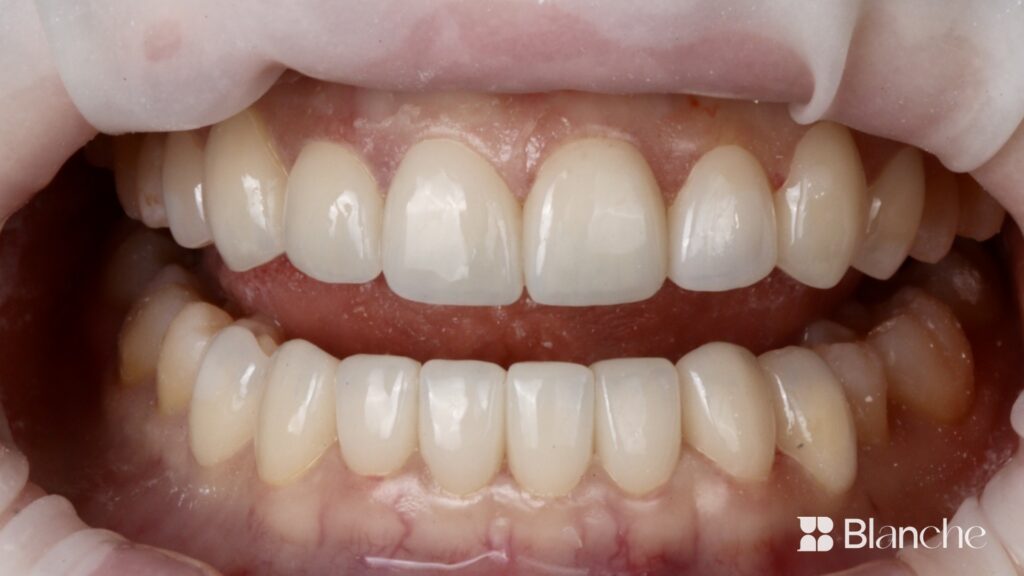
An actual case treated at Blanche Dental Clinic. Results vary with each patient’s dental condition.
Frequently Asked Questions
Q. Do no prep veneers last as long as traditional veneers?
They can. Because they bond to intact enamel, the bond itself is often more reliable. Lifespan still depends on material, edge fit, bite, and habits.
Q. Are no prep veneers permanent?
They are a long-term treatment, not a temporary one. They are bonded strongly and are not designed to be removed casually, even though the tooth underneath is largely preserved.
Q. What is the most common reason no prep veneers fail early?
Uncontrolled grinding and heavy force on a thin edge. A bite check after bonding and a night guard address most of that risk.
Side effects and individual differences
Veneers may cause temporary sensitivity, and chipping or debonding can occur. Results and lifespan vary with tooth condition, bite, and habits, so treatment decisions should follow an examination and consultation.
I have spent my career focused on veneers, and I still judge success by one test: whether your teeth feel like your own years later.
If you want to know how long veneers could last in your mouth specifically, we will start by looking at your enamel, gums, and bite.
What happens at your first consultation
1. We listen first — what bothers you and what you hope for. 2. We walk you through your scan results and every option.
3. You get itemized costs and timing, and you can decide later, even after you fly home. At Blanche, we explain everything at least four times, by principle.
Consultation — Blanche Dental is located between Nonhyeon and Sinnonhyeon stations in Gangnam, Seoul. For a consultation in English, message us on WhatsApp with your photos, and see our pricing page for current fees.