
Gum graft Korea is a search that often starts in the mirror. A tooth looks longer than it used to, or a root feels sensitive when you drink something cold. Maybe a dentist at home has already used the word “recession.”
Then a quieter worry arrives. Is it sensible to have gum surgery in a city you are only visiting? And what if the gum slips back once you are home?
Those are fair questions. Here is how we think about them in Seoul.
A note from Dr. Kim
I would rather you understand why your gum moved than simply book a surgery date.
“Why damage a tooth worth more than you can price? Blanche started from that question.”
Gum graft Korea: first, why did the gum recede?
A graft can cover or thicken gum. However, it does not remove the reason the gum moved in the first place. So we start with the cause.
The usual causes are gum disease, hard side-to-side brushing, naturally thin gum, orthodontic movement or grinding, and crown edges near the gum line. Often, more than one is involved.
If your gums are inflamed, gum treatment comes before any surgery. That means scaling and treating the inflammation first. Grafting onto inflamed tissue would mean building on a weak base.
Think of it like patching a bare spot on a lawn. New turf can take, but only if the soil underneath is ready.
And if people keep cutting across that corner, the bare patch comes back. Gum behaves in a similar way: if the cause stays, gums can recede again.
CTG, FGG and root coverage: three different jobs
“Gum graft” sounds like one procedure. In practice, it covers a few techniques, each solving a different problem.
| Procedure | What it does | Where it often fits | Worth knowing |
|---|---|---|---|
| Connective tissue graft (CTG) | Tissue from inside the palate is placed under thin or receded gum | Thickening gum, and together with root coverage | The color blends in fairly naturally |
| Free gingival graft (FGG) | Thin surface tissue from the palate widens the band of firm gum | Around teeth or implants, for example lower front teeth | Color and texture can look different from nearby gum |
| Root coverage | Covers an exposed root with gum | Visible recession on a tooth | How much can be covered depends on bone, gum thickness and tooth position |
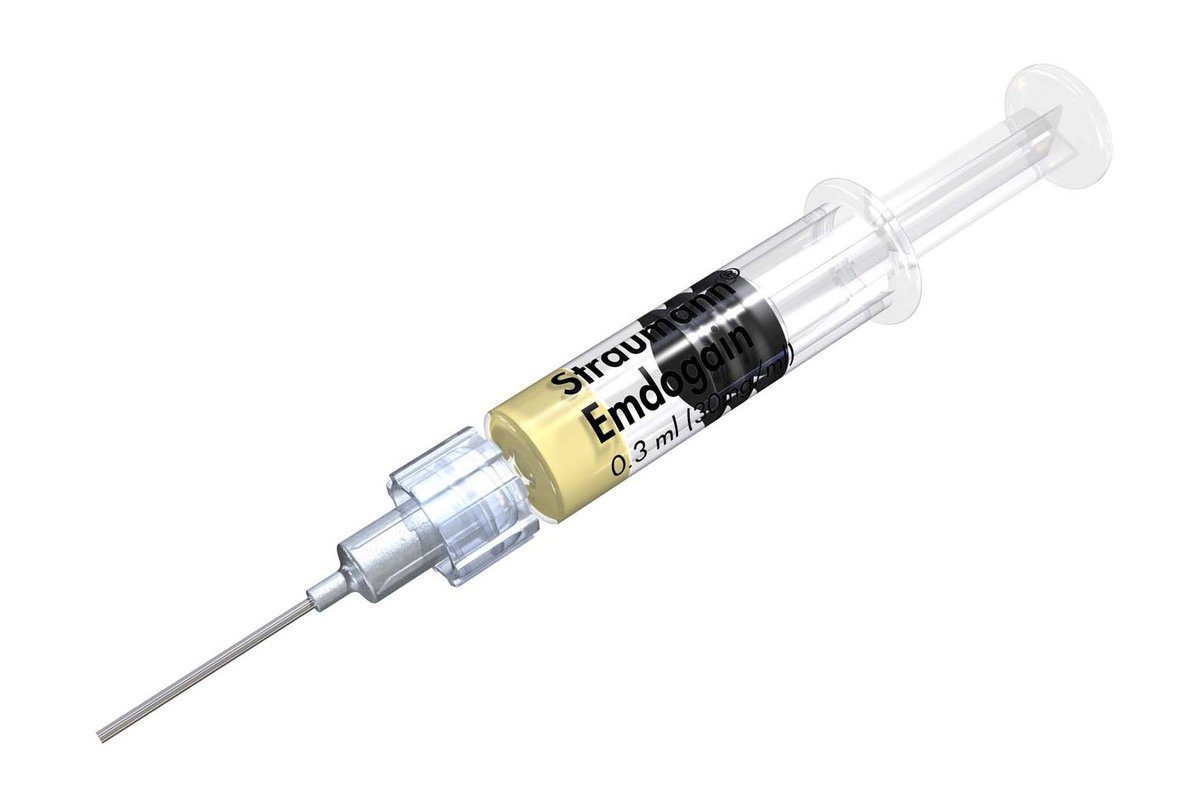
| Emdogain | A gel applied to a cleaned root surface during surgery | Alongside periodontal surgery or root coverage | Not a standalone treatment |
Emdogain is a Straumann product, an enamel matrix derivative. We use it during surgery, not instead of it.
Its results depend on bone shape, smoking and care. It is also less predictable when bone loss is wide and flat.
What the exam decides for a gum graft
Photos help, but the plan comes from the exam. Three things set the limit on root coverage: the bone height between the teeth, the thickness of the gum, and the position of the tooth.
Location changes the priorities, too. On upper front teeth and canines, color and the gum line matter, because they show when you smile.
On lower front teeth, the gum is often thin and the band of attached gum is narrow. There, an FGG sometimes comes first.
When several teeth are involved, we may treat them in one wider procedure or in stages. Gum thickness and the tissue available in the palate decide which.
One case from our clinic
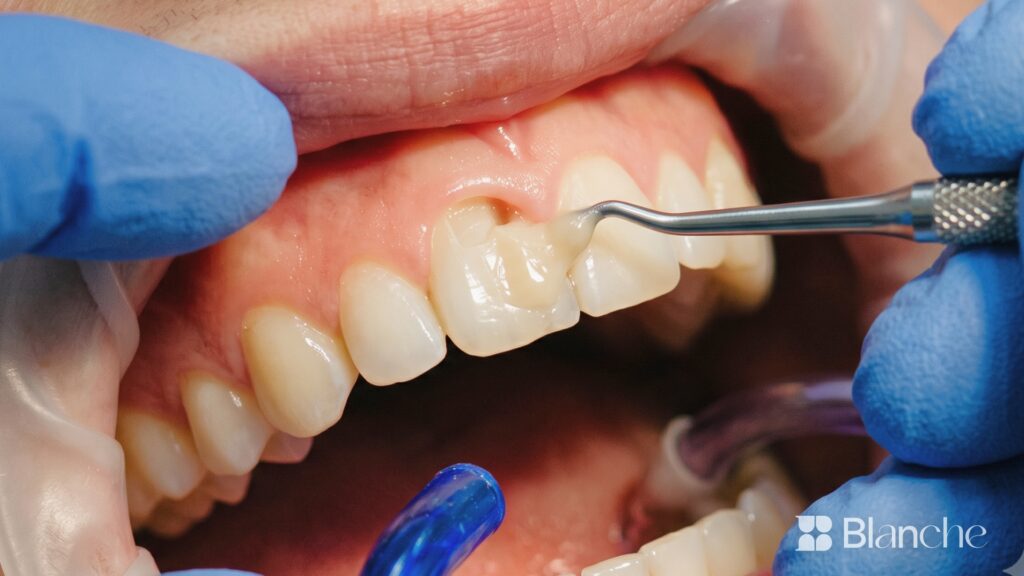
With the patient’s consent, we have published one case. An upper canine with an exposed root was covered using CTG together with Emdogain.
That case does not set an expectation for yours. Coverage depends on bone and gum, a root may be only partly covered, and recession can return if the cause remains.
“Can a graft cover the root that is showing on my tooth?”
Send us a close-up photo where the receded gum is visible, plus a recent X-ray if you have one. We’ll tell you what may have caused it and which options are worth checking at the exam.
Who performs a gum graft at Blanche
At Blanche, gum surgery is performed by Dr. Kim Tae-hyung and Dr. Kim Ha-young. Both consult in English, so you can ask your questions directly.
You will hear the cause, the options and the trade-offs before any decision is made.
One distinction is worth making here. If your concern is the opposite, too much gum showing when you smile, that is a different treatment. Our gummy smile treatment guide covers it.
Planning a gum graft Korea trip without guessing
We do not quote a number of visits or days for a gum graft Korea trip before the exam. The schedule depends on what we find, so we explain it after the exam.
What we can say now is simple: plan a check-up visit before you fly home. That way, we see the area once more before your flight.
Cost works the same way. We give an itemized cost after the exam, so you can see each line before agreeing to anything.
The clinic is a 30-second walk from Nonhyeon Station Exit 4 in Gangnam, about an hour from Incheon Airport. For wider trip planning, our dental tourism guide for Korea covers the basics.
In short, a sensible gum graft Korea plan starts with the cause, then the exam, then the schedule. Booking surgery comes last.
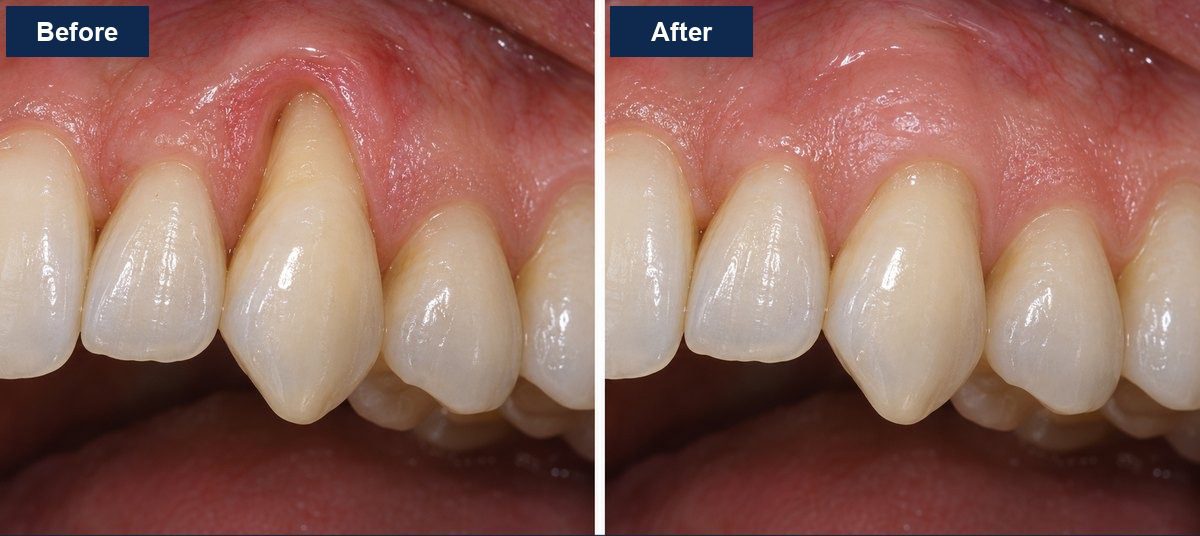
An actual case treated at Blanche Dental Clinic. Results vary with each patient’s dental condition. Root coverage using a connective tissue graft (CTG) and Emdogain, published with the patient’s consent.
Frequently asked questions
How should I plan a gum graft Korea trip from abroad?
Start by sending a close-up photo of the receded gum and any recent X-ray. After the exam, we explain the schedule and an itemized cost, and we recommend planning a check-up visit before your flight home.
Can my gums recede again after a graft?
Yes, they can if the cause remains. That is why we look at inflammation, brushing, grinding and crown edges first, and why a root may be only partly covered.
Will the grafted gum match my own gum color?
It depends on the technique. A connective tissue graft blends in fairly naturally, while a free gingival graft can look different in color and texture.
Side effects and individual differences
Swelling, pain, bleeding, sensitivity, and soreness where tissue was taken from the palate can occur after gum surgery. How much gum is restored and how long recovery takes vary from person to person.
Keeping your own teeth is always my first choice, and the gum around a tooth is part of what keeps it there. When we graft, the goal is not a quick fix for a photo. It is a smile that still works twenty years from now, with the cause dealt with first.
How your first consultation works
1. We listen to your concerns and what you want to be able to eat and smile with again.
2. Based on your exam, we explain why the gum receded first, then every available option.
3. We give itemized costs and a visit schedule. You are welcome to decide later, at home.
We repeat every explanation at least four times, and no decision depends on one person’s judgment alone.
Consultation — Message us on WhatsApp with a close-up photo of the receded gum and a recent X-ray if you have one, or check our fee schedule. Same pricing for Korean and international patients.